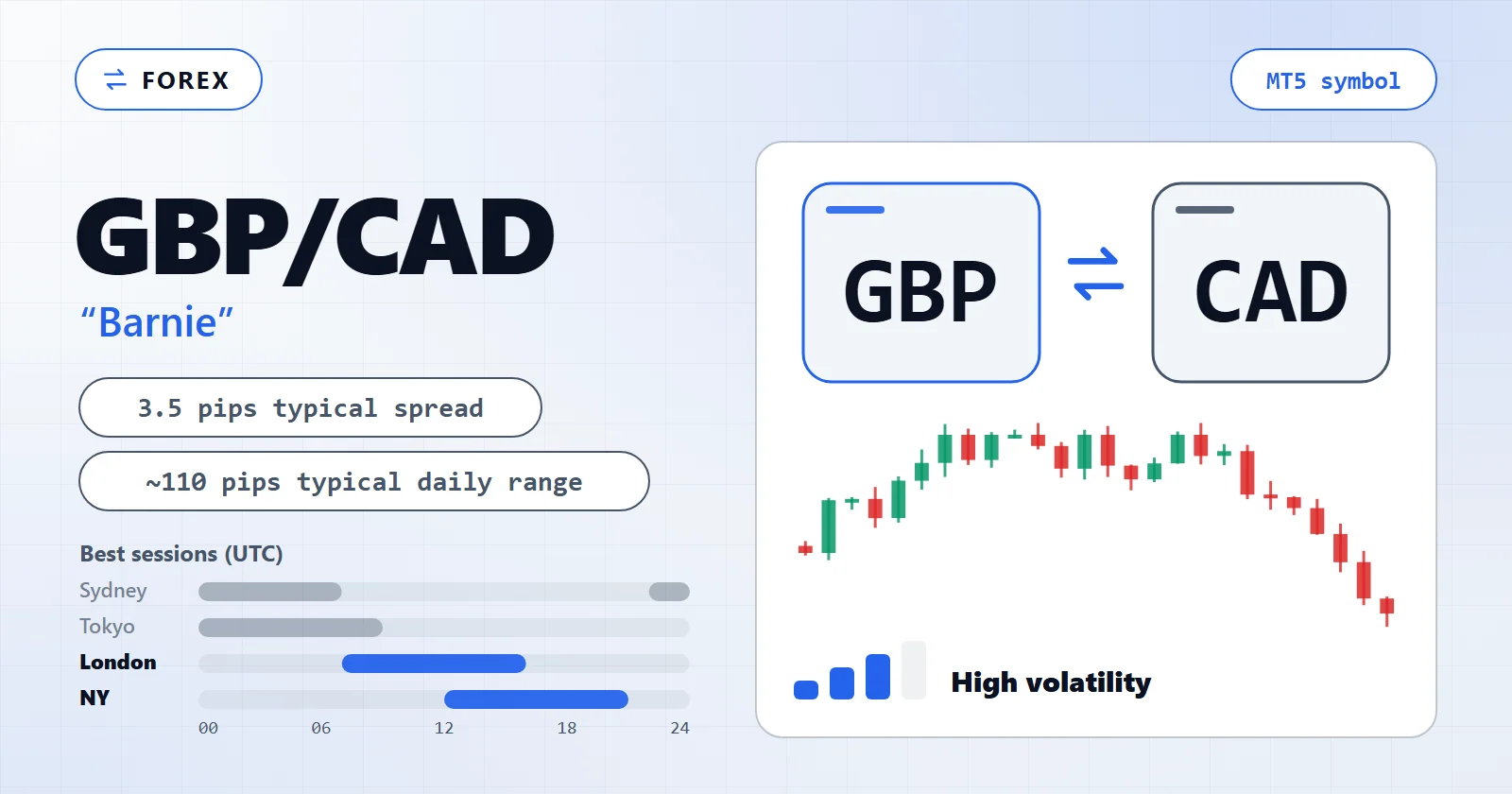
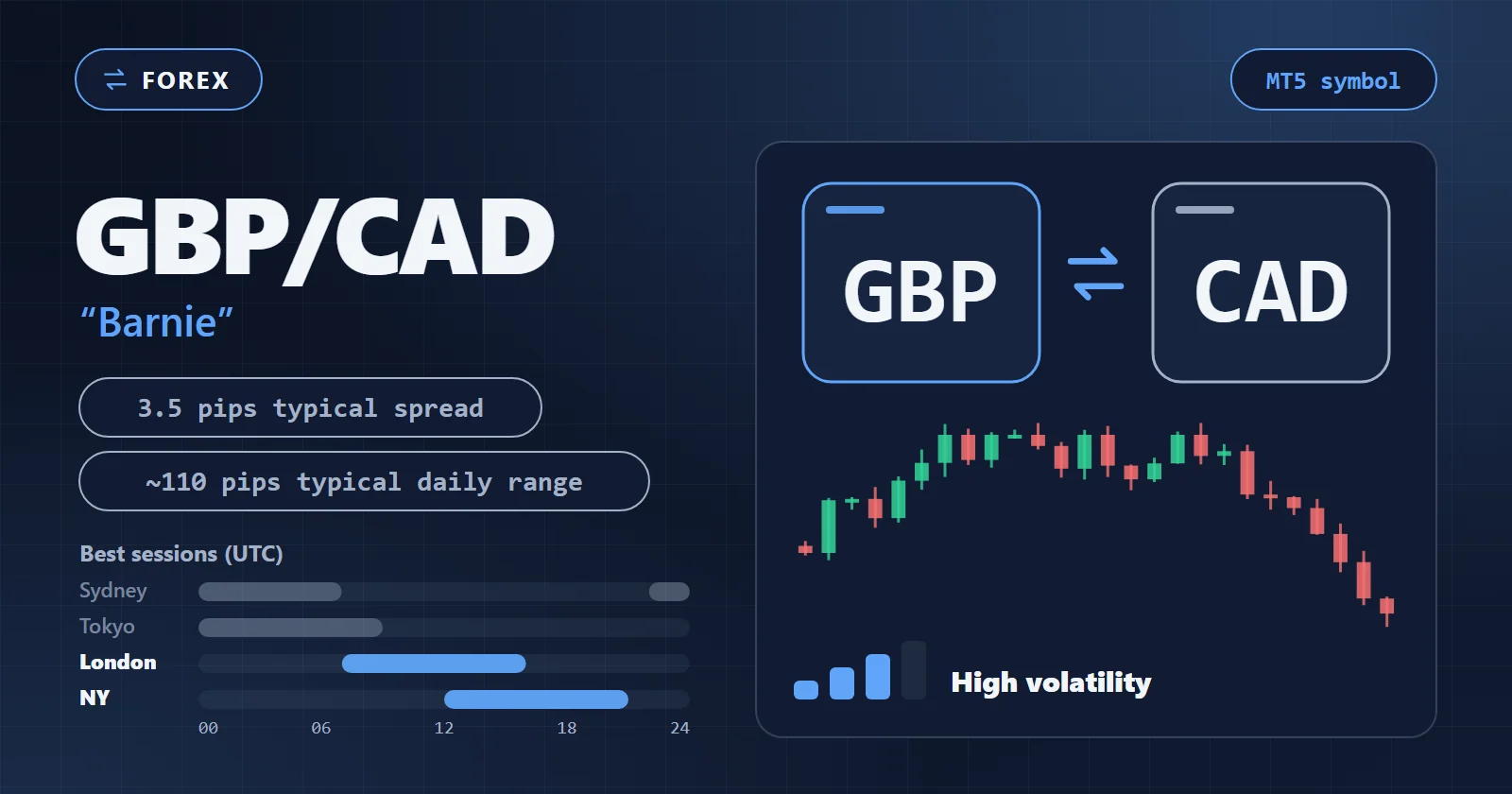
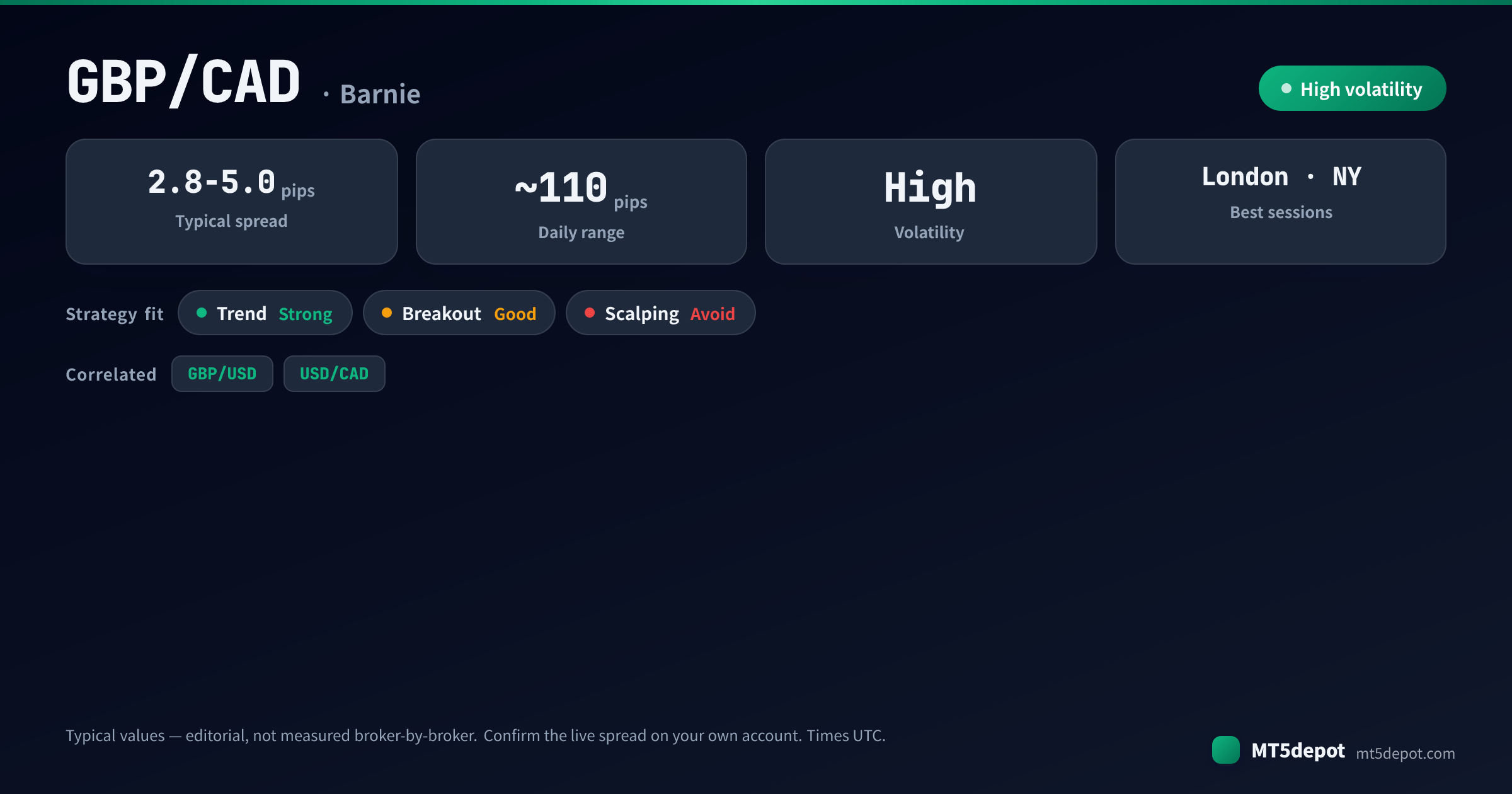
GBP/CAD — nicknamed “Barnie” — is a double-major cross that stacks two things at once: the Bank of England-driven volatility of the pound and the oil-linked sensitivity of the Canadian dollar. That makes it a fundamentally different animal from a single-driver pair like GBP/USD — you are carrying two independent stories on two separate economic calendars inside one wide-spread instrument. The first question is not which indicator to use but whether your strategy genuinely wants that two-driver, high-cost character or merely tolerates it. A system that assumes one tidy catalyst will be surprised here roughly half the time.
This page covers what GBP/CAD gives an automated strategy that a European major does not, the sessions that decide its results, and what its wide spread actually costs. It then covers the failure modes that catch systems ported over from tighter pairs, and how to build and test a Barnie EA of your own.
How GBP/CAD Behaves: What Barnie Gives an EA
The defining feature of GBP/CAD is that it is a double-major cross. It stacks GBP’s policy volatility on top of CAD’s oil sensitivity, so the price answers to two independent drivers on two different calendars at the same time. For an automated strategy, that character reduces to three properties:
- Two drivers, two calendars. The GBP leg tracks Bank of England policy and UK-specific risk; the CAD leg tracks Bank of Canada policy and the price of crude oil. These fire on separate schedules, which means a move can originate on either side — and a system built around one calendar is structurally blind to the other.
- A wide range in a wide-spread wrapper. Our published typical daily range for Barnie is near 110 pips — labelled typical, not measured broker-by-broker — which gives trend and breakout systems room to work. But that range arrives inside a standard spread of roughly 3–5 pips and thinner liquidity than a dollar major, so the cost of participating is materially higher than on a European pair.
- Independent oil sensitivity. Because the CAD leg is tied to crude, a spike in oil can move GBP/CAD hard on a day when nothing at all is happening in the UK. A quiet UK data calendar is not the same as a quiet GBP/CAD.
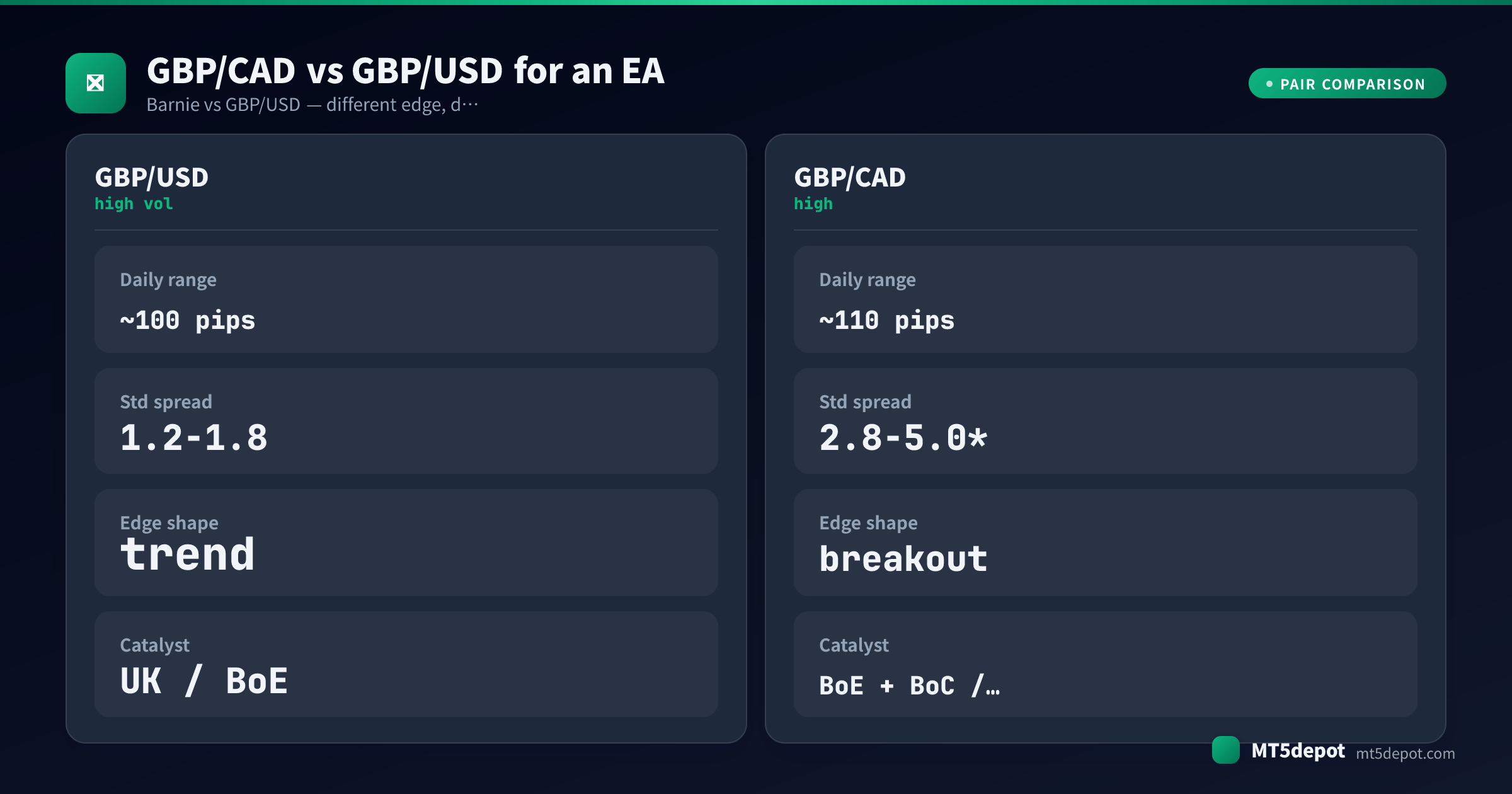
The trap for automated strategies is that Barnie’s wide range looks like a breakout playground on a backtest. But the same instrument charges a 3–5 pip spread on every entry and can be moved by a driver your EA never reads. A system that watches only UK data will occasionally take a clean trend signal straight into an oil-driven reversal it had no way to see coming. The loss looks random on the equity curve, but its cause is the second calendar the EA was never watching.
Which EA Strategies Suit GBP/CAD?
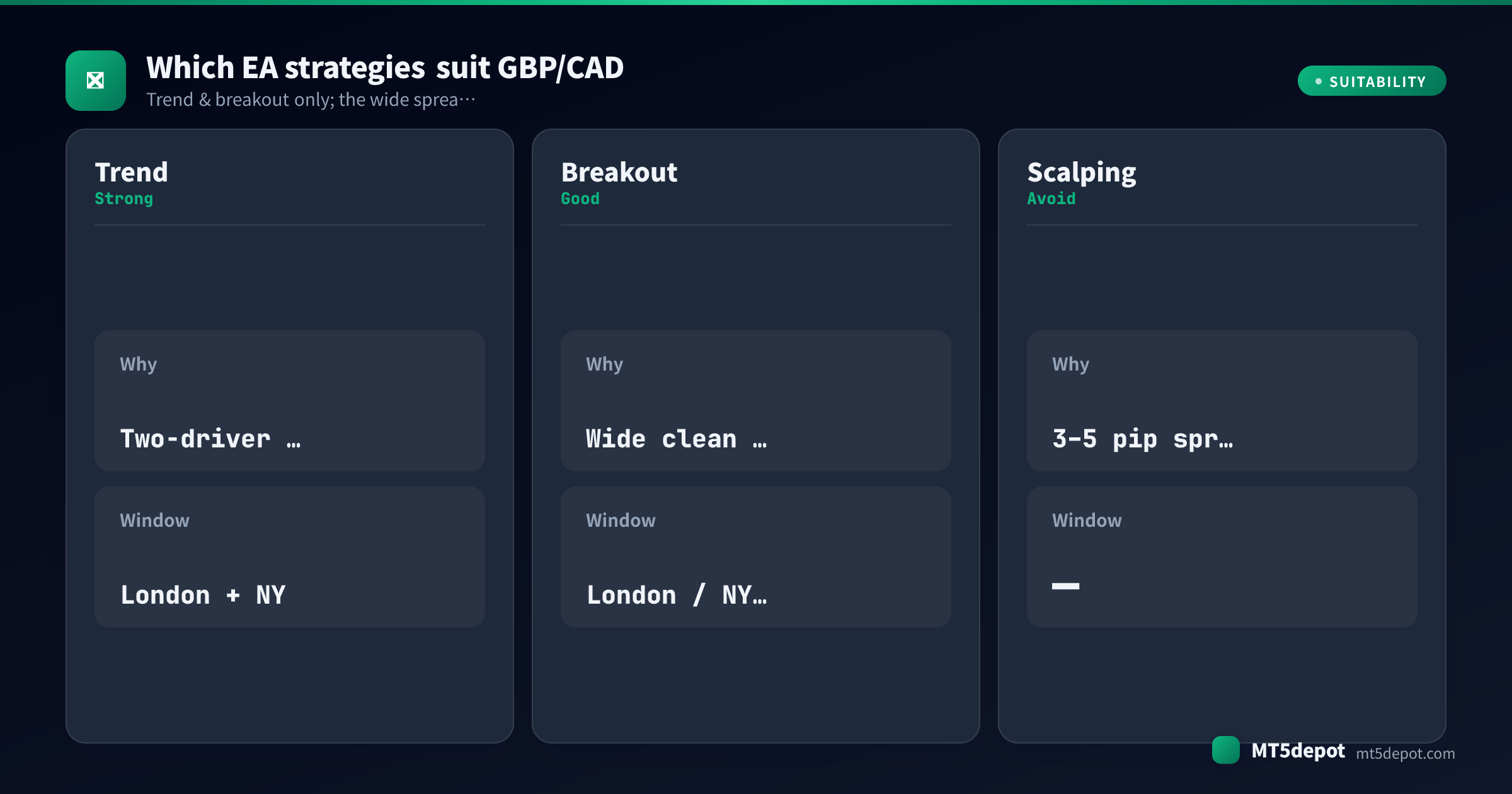
The pair’s profile lists trend and breakout as suitable — and notably does not list scalping, because the spread rules it out. Suitability is an editorial assessment, not a promise: the shapes below tend to fit Barnie’s character, but each still has to be proven on your own data.
| Strategy | Fit on Barnie | Why |
|---|---|---|
| Trend-following | Strong | Two independent drivers produce sustained directional moves across the London and NY windows. A patient trend hold is one of the few shapes that can absorb the wide spread. |
| Breakout (pending orders) | Good | The pair’s wide, relatively clean ranges give an objective level to trade. Pending-order entries at the range edge are less exposed to the wide spread than market fills. |
| Scalping | Avoid | A 3–5 pip standard spread is a recurring tax that no high-frequency edge on this pair reliably overcomes. Even raw’s ≈1.2–2.2 pips plus commission leaves thin liquidity working against you. |
Trend and breakout are the shapes patient enough to turn Barnie’s range into an asset while paying its spread; anything faster is fighting the cost structure from the first tick. The practical route is to build one of these shapes yourself. The Builder ships trend and breakout templates that accept GBP/CAD and exposes every parameter. Test it (below) before you trust a single number.
Best Trading Hours for GBP/CAD EAs
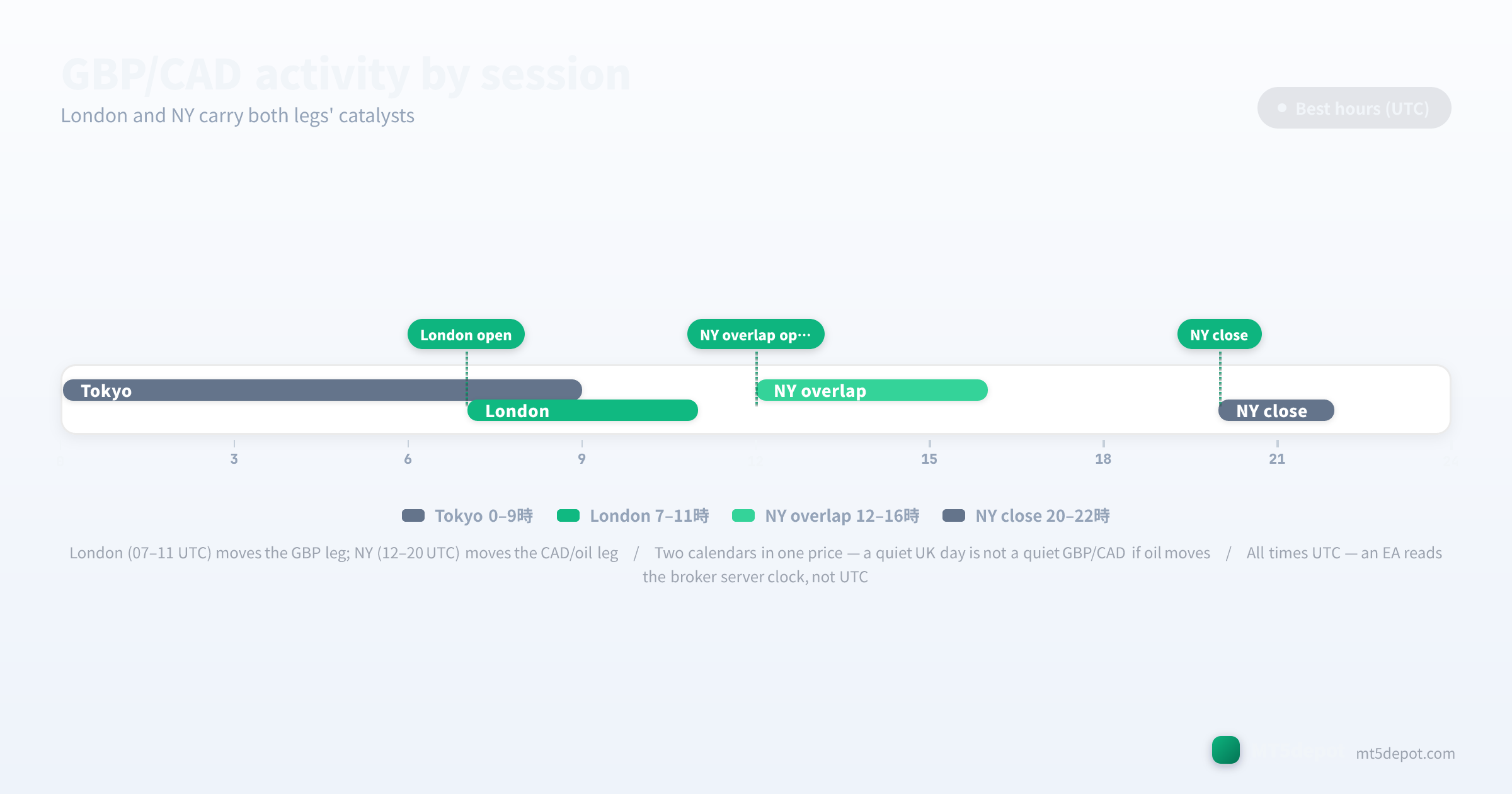
Session structure decides more of a Barnie result than indicator choice does, and on this pair each session tends to carry a different one of the two legs:
- Off-session hours (roughly 21:00–06:00 UTC): thin liquidity, range-bound, prone to whipsaw and gaps. Trend EAs reading H1 signals here often trade noise, and the lower liquidity means an off-hours gap can hit stops harder than on a major.
- London window (07:00–11:00 UTC): the GBP leg’s primary window. BoE-linked flow tends to expand the range here, and this is where the pound side of the pair usually does its work.
- NY window (12:00–20:00 UTC): the CAD/oil leg’s window. Bank of Canada data and the North American oil session drive the Canadian dollar side, giving Barnie a second daily driver that a UK-only view would miss entirely.
- Late NY (after 20:00 UTC): range contraction and false breakouts; session-quality filters should generally exclude these hours.
In our editorial assessment, EAs that restrict trading to the London-and-NY hours often out-perform 24-hour variants on GBP/CAD. A session filter is best treated as part of the strategy definition rather than an optimisation flourish. It is a hypothesis worth testing on your own data. One clock rule applies to every time above. They are all UTC. But an EA reads your broker’s server clock, which is usually not UTC, so a “07:00” filter shifts silently when you move the EA between brokers on different server timezones. Verify it once in MT5’s Market Watch, and every session boundary lines up.
Spreads, Costs, and Execution
GBP/CAD is materially more expensive to trade than a European major, and the spread is the single fact that shapes which strategies survive on it. The figures below are editorial reference ranges compiled from broker-published standard and raw conditions (updated July 2026), not broker-by-broker measured numbers. Confirm the live spread on your own account before you size a strategy:
| Account type | Typical GBP/CAD spread | Commission | Who it suits |
|---|---|---|---|
| Standard | 2.8 – 5.0 pips | none | patient trend / breakout EAs |
| Raw / ECN | ≈1.2 – 2.2 pips | $3 – 7 / lot | still trend / breakout — not scalping |
Two cost rules specific to this pair:
- The wide spread is a recurring tax, not a rounding error. A 3–5 pip standard spread is charged on every entry, so a strategy that trades often bleeds the cost of a full winning trade back to the broker over a session. That is why Barnie belongs to patient trend and breakout holds where the spread is amortised across a large move. No scalping shape reliably clears it — even on raw, where the spread compresses but thin liquidity remains.
- The commission is an account property, not a pair property. The same $3–7/lot raw commission applies whether you trade GBP/CAD or a major; what changes between pairs is the spread on top of it. A Barnie EA validated at a raw spread and deployed on a 5-pip standard account is running a different strategy from the one you tested.
Risks to Test Before Going Live
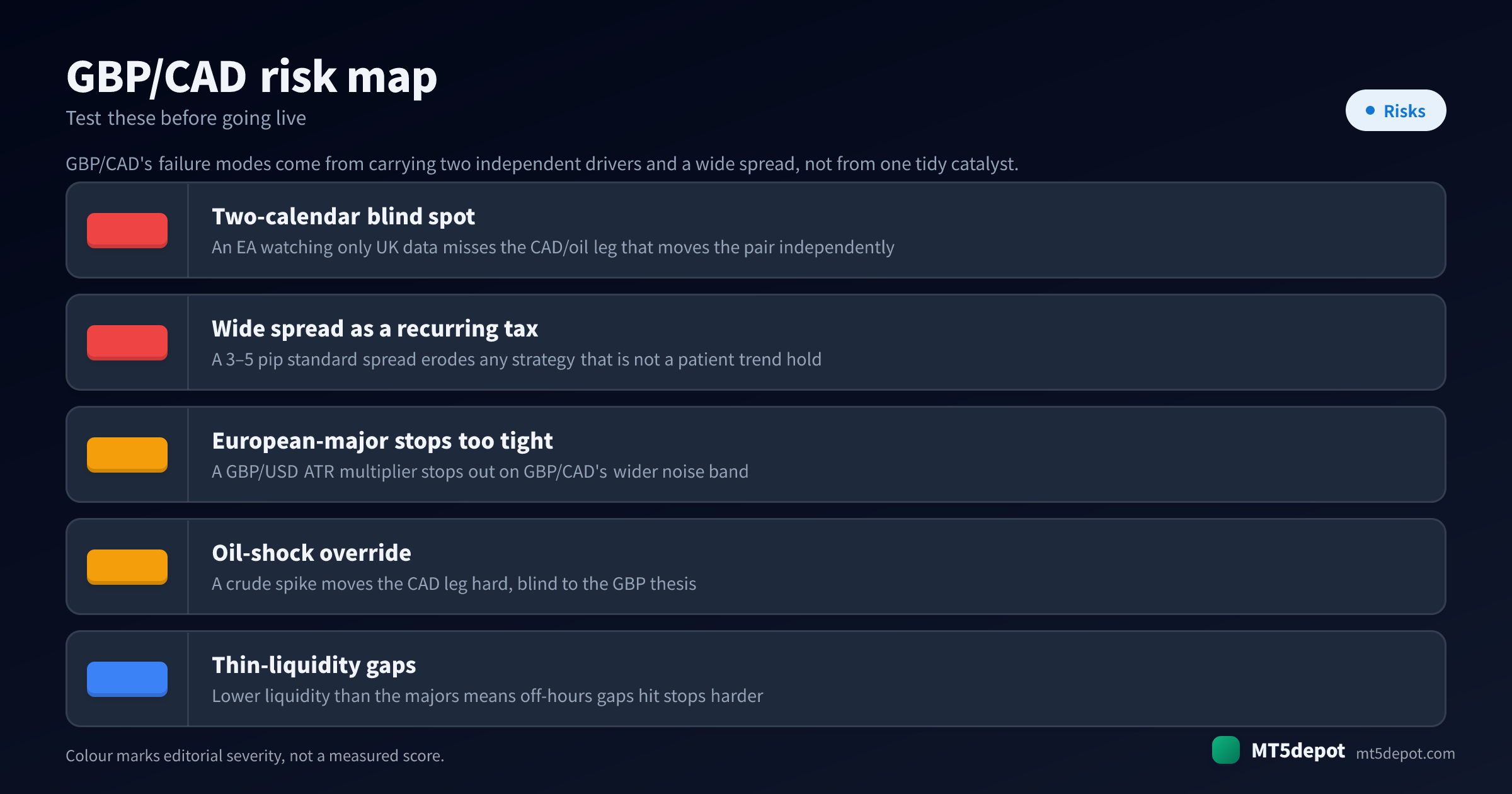
GBP/CAD’s failure modes come from carrying two independent drivers and a wide spread, not from one tidy catalyst — so a generic risk checklist misses them:
- The two-calendar blind spot. An EA watching only UK data misses the CAD/oil leg entirely, and that leg can move the pair independently. This is the failure mode most unique to Barnie: a clean GBP thesis can be overrun by a Canadian driver the system never reads.
- The wide spread as a recurring tax. A 3–5 pip standard spread erodes any strategy that is not a patient trend hold. Test the strategy at the spread you will actually pay, not the platform default, or the equity curve is fiction.
- European-major stops are too tight. A GBP/USD ATR multiplier stops out early on GBP/CAD’s wider noise band. Re-size stops and targets to the pair’s own ATR before anything else — this is the single change that most often decides whether a ported strategy survives.
- The oil-shock override. A crude spike moves the CAD leg hard, blind to whatever the GBP thesis was. A trend EA with no awareness of the oil calendar can be stopped out by a move that has nothing to do with its signal.
- Thin-liquidity gaps. Lower liquidity than the majors means off-hours gaps hit stops harder, so slower strategies need stops that survive a gap rather than a tight level that a thin-market jump slices straight through.
How to Test a GBP/CAD EA
On GBP/CAD, the test is the whole edge. Hold anything you build to the bar set out in the site’s methodology:
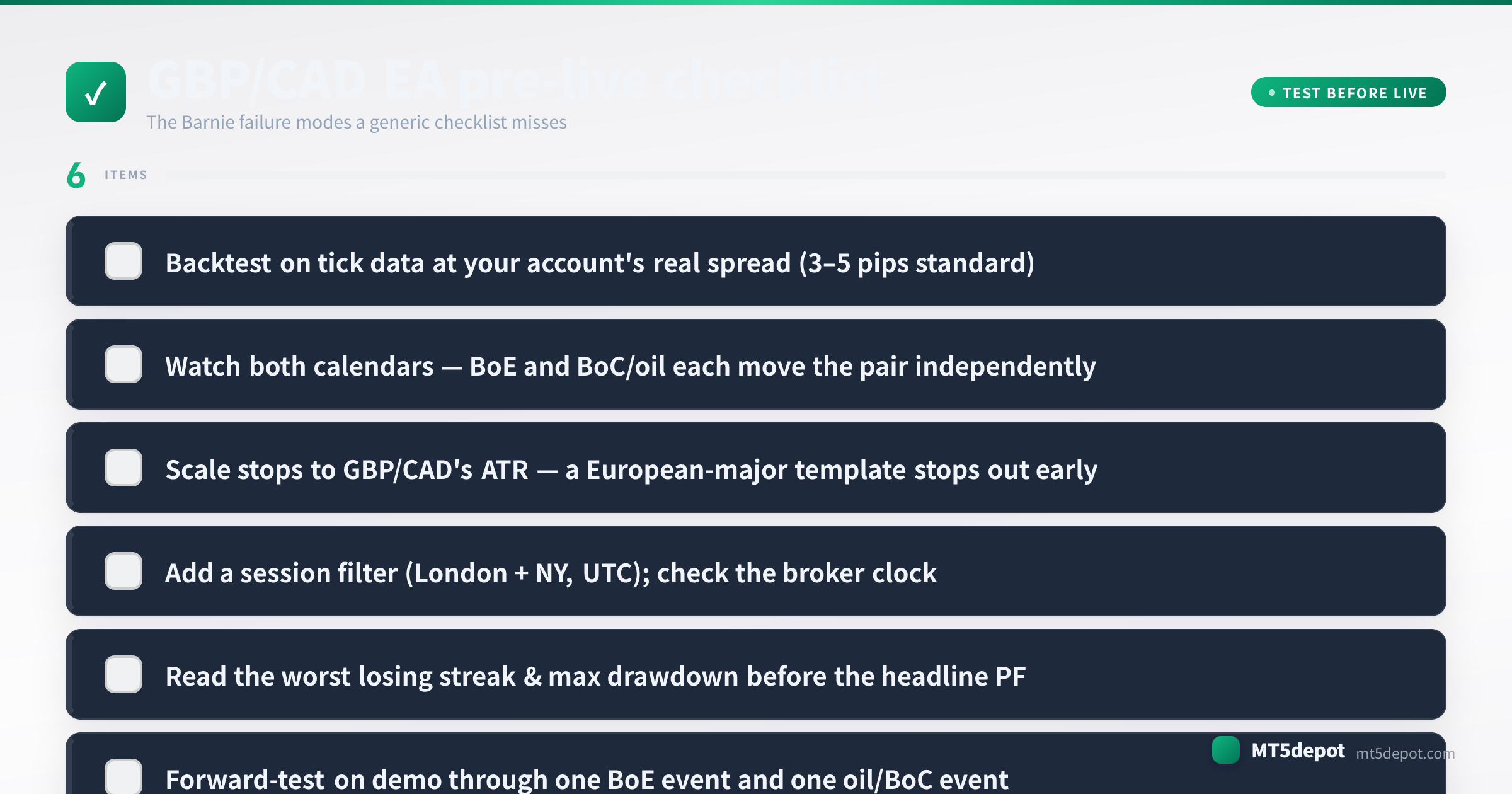
- Backtest on tick data at your account’s real spread. Use an every-tick model with the 3–5 pip standard or raw spread you will actually trade, not the platform default. On a wide-spread cross this matters more than on any major. A strategy validated at a spread it will never see is a fiction, and this is where the typical-vs-measured gap above becomes real money.
- Read the worst losing streak, not the headline profit factor. The max drawdown and the longest run of losing trades tell you the capital and the patience the strategy demands. Budget for the worst streak before you fund it.
- Forward-test on demo through both calendars. Barnie’s defining risk only shows up around its catalysts. A demo window should span at least one BoE event and one oil/BoC event. Testing only the UK side leaves the pair’s second driver unexamined.
- Confirm the server clock before the first live trade. Re-check MT5’s Market Watch time against the UTC session hours above, and re-check it again after any broker migration — a step that is easy to skip and expensive to miss.
Every backtest number this produces is a historical measurement, not a forecast — say so in your own notes, and size for the drawdown you measured rather than the return you hope for.
GBP/CAD EAs and Builder Templates
We have not published a GBP/CAD backtest of our own, and a single-driver result from GBP/USD does not carry over to a pair that the oil calendar can move on its own. The honest route to a Barnie EA is to build and verify one:
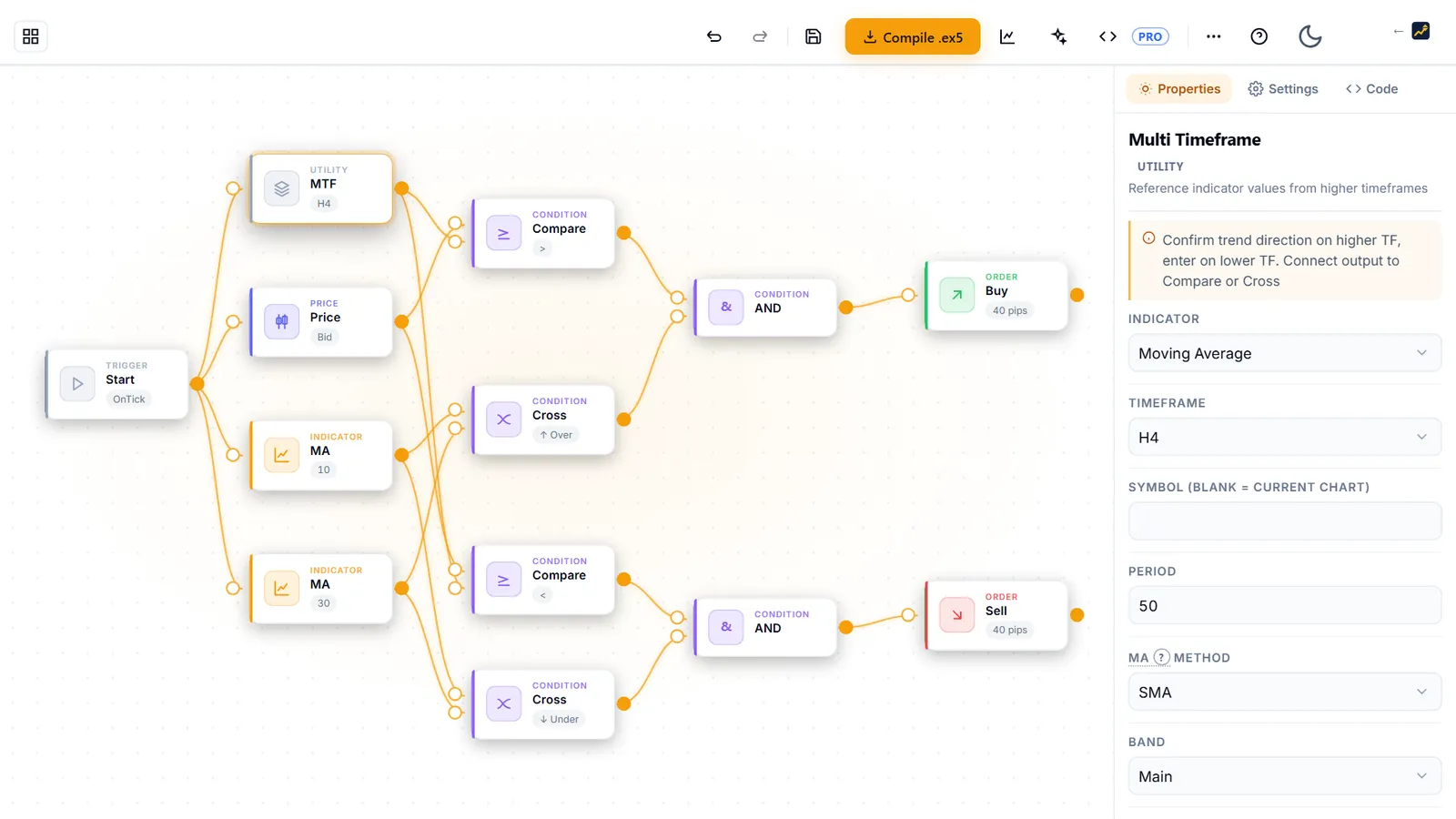
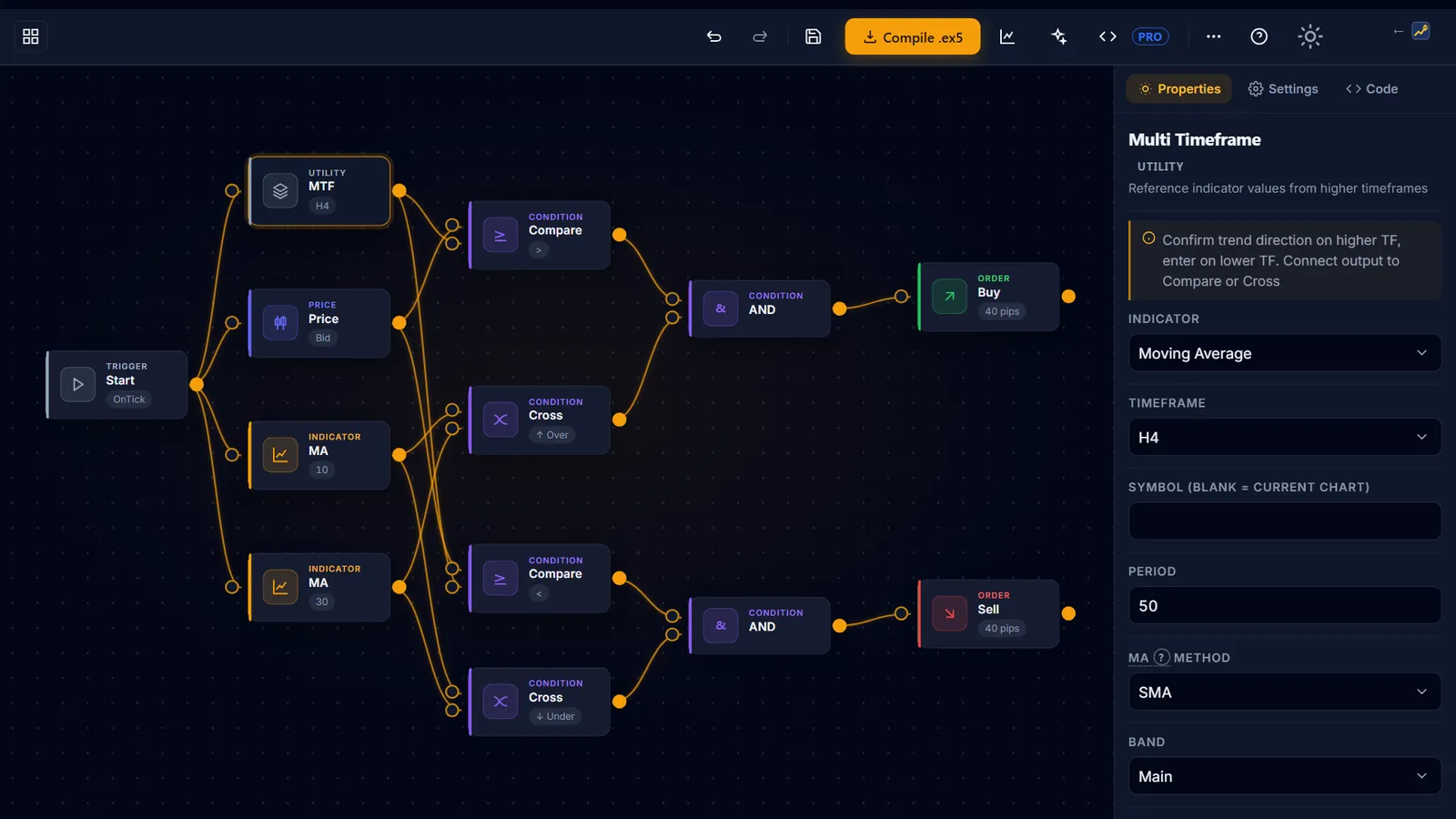
- The Builder (open it here) accepts GBP/CAD in its trend and breakout templates. The EA you deploy is built on your own numbers, and the CTA below covers exactly what it produces.
- Related-pair reference. The GBP leg is common ground with GBP/USD, so a GBP-leg system’s session filtering and stops are a reasonable starting shape. Re-size them to Barnie’s own range, and add the oil and BoC calendar that a GBP/USD system never needs.
- The concept canonicals. If a term above is unfamiliar, the spread, volatility and ATR entries define the mechanics a Barnie EA depends on, and your own account’s contract specification shows which account type quotes the pair at a workable spread.